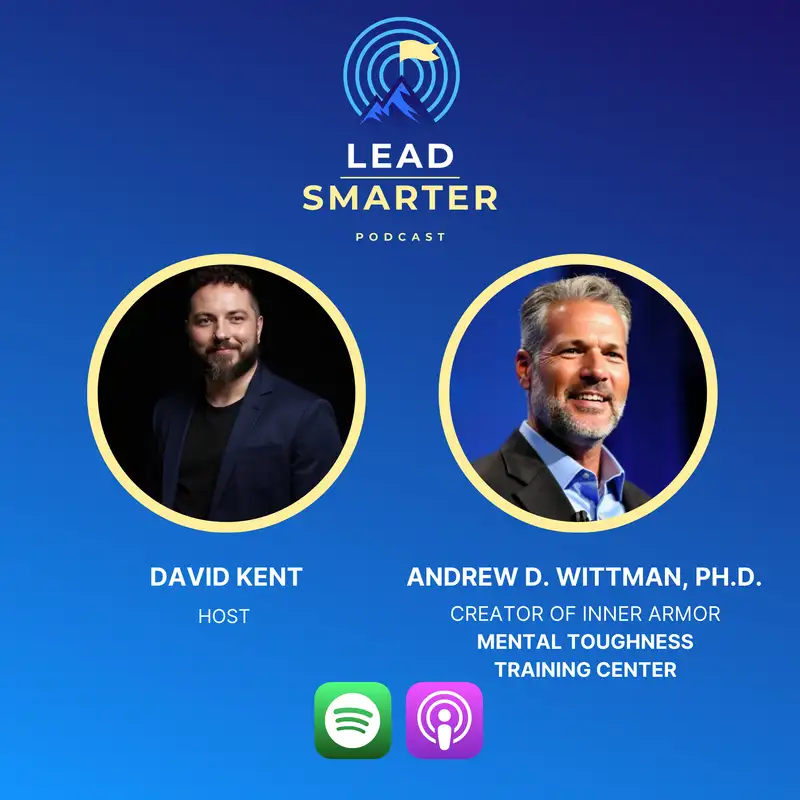
Why Expectations Fail (And What Leaders Should Do Instead) with Andrew Wittman
welcome to Lead Smarter
the podcast where you'll hear powerful
no nonsense conversations about leadership
with today's top experts
and real world leaders like yourself
get the inside strategies
insights and secrets
they've Learned on the journey to lead smarter
let's dive in
today's guest is Andrew D
Wittman a former Marine Corps infantry combat veteran
ex law enforcement officer
and the creator of Inner Armor Perpetual Resilience
Andrew has spent decades
operating and training in high pressure environments
from combat zones and federal protective details
to advising leaders and frontline teams
in construction
EPC and other mission critical industries
his work isn't about motivation or mindset hacks
it's about training people to respond under pressure
rather than react emotionally
in this conversation
we dig into what resilience actually is
why leaders need to master their
internal responses before they can lead others
and how clarity agreements
and predictability build trust inside teams
when the stakes are high let's get into it
hey Andrew
thank you for joining me again
and giving me a chance to uh
dive deeper um
after having getting
after we've met and learning more about you
and getting to share um
your perspectives with the listeners about leadership
and I I really wanted to dive into where
you actually had touched on
inner armor and perpetual resilience
last time we talked um
what inspired you to create
the Inner Armor and Perpetual Resilience programs
yeah well
thanks for having me David
first off thanks for hosting me
I appreciate you know
there's a bazillion people out there you could have on
and you picked me so I appreciate that
um yeah
so the inner armor thing that was a
I was doing a lot of mental toughness training already
and I after I
I wrote the parenting book
it went to like
No. 1 of 7 secrets of parents resilience went to No. 1
I got a lot of I was on like Fox News Today show
all this crazy press um
I got a phone call from the chaplain of the Marine
Corps um
the commander of the Marine Corps
tasked him to see if you could reach out to me
and see if we could do something for PTSD
and suicide rates
uh with the active duty troops
right for
he called it the spiritual fitness of the warfighter
because like
the drugs weren't helping
the counseling was whatever they were
doing it it wasn't moving the needle
was there something else we could do
and so we launched into that
and we did a lot of work on the back in the Mia
as a former enlisted Marine
uh in the infantry
I know we don't have time and first off
going to a class whatever we go through 100 classes
but you sit through a class on resilience or whatever
it's gonna you're onto the next thing the next minute
so we wanted to work it in like
it was like a workout of the day
we did a resilience workout of the day
like we would do PT
and it would only take a few minutes
so they could make it part of their daily routine
and that's where Inner Armor came from
and then uh
after I guess Covid hit and all this went on for
we got out of the Covid and everything
and I just kind of felt like
I needed to put it into a book
and get it out to like everybody um
and and make it available to
you know everyone to
to do this workout of the day for their inner armor
you know because look man
the world's crazy dude
I don't know if you've looked around
but holy smoke with the chaos
right yeah
it's insane
well and I know you mentioned
you just mentioned resilience
and you talk about tactical versus strategic resilience
how can leaders know which to use and when
that's a great question
but so for me this is what I mean
I'm just saying what I do um
strategic is for like
leaders or people in your organization that they're
like they wanna move up and they have their
they're committed to the vision
and they want this long term out
tactical is for like
you know like we call it the grunt on the ground right
or like we use also in like um
we do a lot of stuff in um EPC which is engineering
procurement and construction right
so the trades right
the guys that are out actually doing the welding
or
they don't care about your Emerald City and the vision
they're just trying to get this job done
and what's in front of them
so I'm gonna use tactical um
resilience for those guys
that they're not worried
about buying into a long term vision
or like you know like a football program
we're trying to win a national championship man
I'm just trying to do the stuff that's in front of me
I want to get through traffic today
get my bills paid and not lose my crap
you you understand you know what I'm saying
so that's where tactical is
it's my everyday grind
or strategic is I'm looking for my Emerald City
like I have a 300 year plan
people like I don't want no 300 year plan
somebody wouldn't have like a 300 hour plan right
get the payday so if that's where they're at
then they get tactical resilience
if you're looking for this longer term snapshot
from the 50,000 foot view of your life
then that's strategic does that make sense
yeah and I
I know like from my own perspective
I'm trying to figure out
the balance of working with team members
and just in my own organization
as an example I'll be working with my own team members
and I'm trying to focus on the businesses
where our business is going like high
high level somebody's gotta make those decisions
and I I also need to figure out how to communicate
that to team members and I
you're right there's some team members
the role they play that does not matter to them
it like I doesn't matter how I communicate it to them
the only way I found that it has any value
is to figure out how they fit in that and and
and speak to them rather than at them at some level
that doesn't even address the
the value they bring yeah
that's a leadership you know
what you're talking about is how to motivate
you gotta find out what their internal drivers are like
so that's a whole different conversation of like
cause somebody's driver might just be
I'm just here to finance me going to my kids travel
soccer club or whatever you know what I mean
like that's their whole thing
and they're really focused on the kids travel
soccer or whatever it is I'm just using that as example
right and if that's what it is
then while you're here they're I mean
they'll give you their
their max effort while they're there
but they're not gonna come in overtime
and they're not missing the soccer games
you already gotta know that right
so that's how you would coach them from that
or motivate them from that
that's an internal driver issue right
and as a leader of a team
I need to figure out cause look
here's the thing man
human beings everything we do is for selfish reasons
everything there's nothing that we don't do
that's not for a selfish reason
and people like well
I'm a family person I'm like right
which how's that make you feel good
which is a selfish reason you are a family person
cause you congratulate yourself
that you're a family person
that makes you feel good right
or I'm frugal and that's which again selfish but or I'm
you know I'm luxury
you know everything is like the best and I'm swag
which also makes you feel it's all self right
I just need to find out what that selfish reason is
as a leader um
and while we're doing that
the resilience piece selfishly
you should just
wanna be able to get through your day without losing
your stuff
you know what I mean like
how do I smooth out the the edges
of this roller coaster and
and it's pretty easy I mean
every human I've ever run across wants to have a
a better calm the storms inside their heads
nobody I've never heard anybody say no
I like it in there I like that storm
I I wanna keep it well
and I mean
what you're describing is basically how people are
making decisions navigating um
their own selfish reasons
their own interests um
and and I know some of the things you talk about is
the science of emotions and
and making decisions uh
you also describe emotions as like chemical reactions
can you tell talk to me about that a bit
how does understanding that help us lead people better
that's like
that's kind of my thing with I call bio psychology
how does the body mind
and the emotions all work together
or against each other
and usually they're working against each other right
so my whole obsession in life was
how do I get mine to work for me
so when you're studying the brain
and a lot of this is coming out now
when I first started studying this back in the 2000
tens elevens
there was no data like there's a lot
like I was so on the front edge of this stuff
it was almost like you know
conspiracy theory kind of stuff
it's like cooking science fiction
but now
every day another study comes out proving these things
um you can't get off your
you know
your social media feed without seeing another study
right so the brain
the way it works
is that it takes all these data
inputs from what you see hear smell
taste touch um
and then um it fires off a chemical
electro chemical reaction
fires off in your brain
these neurotransmitters that connect it
and send it to the region of the brain
where it can make sense and process this information
right
what what we found out is whatever your um
I call it your you know
it's your mindset or your lens or your world view
or however you you know
if you know your ego Igor or Eeyore and you know
hey pooh or your Tigger and you're like pooh right
cause this is a different like mindset
however you do you're gonna process that information
so your brain looks at that and says
whatever what happens in front of you
and that neurotransmitter it's
it's really a hormone
it calls up a hormone that would match your uh
the best version of what you think you see
based on your mindset right
so if today's gonna be an awful day
it's going to call up the hormone
that will prove your genius self correct
today's awful
and so the chemical reaction is this neurotransmitter
be like cortisol
so the stress hormones like oh cortisol
so then you have about a couple of minutes
maybe 30 seconds
before your body floods your endocrine
system floods with that uh hormone um
so
and now it's that it to cause to sustain that response
so I I usually I call it the hormone dump right
that's all these that's all emotions are
so think about this David
have you ever been like in a near wreck
it was like a brakes honk
I have yeah but and then like
and you know it's over everything's safe
but like 30 seconds to two minutes later
then your heart starts pounding after it's over
your heart starts pounding
and then you feel upset for like the next 20 minutes
sick to your stomach all that's the hormone dump right
this happens like all the time
and that's all your emotions are now
so what we need to do if you're gonna be great at this
I'm not I'm a practitioner
I've been at it for 30 years and I'm still not I mean
I'm a journeyman right
I'm practicing it every day
you have to practice it how do I wanna
what I'm seeing
so that it helps me that I call up the right hormone
which is just a drug
I mean endorphins are that's what you know
like morphine comes up it's an endorphin yeah
yeah so how do I call up the right drug if you will
the right hormone to sustain my response
and that's the emotional response that I want so I can
you know there's people that are like always happy
they've trained themselves to have like a
a good response all the time
it's dopamine it's oxytocin
it's all the you know
serotonin at night and all all the good things
melatonin and it's all these
they've trained themselves so they see everything
is that half empty or half full
well so like the half full people
they've trained their responses that way
now the half empty people have also trained their
responses
so they're like the old Krugman get off my lawn
you know whatever you right
crazy kids and getting cut off in traffic
and every time that you um
like have that same response
you're training your entire system to do that
every time so it becomes habit
and that's what we are creatures of habit people
how long does it take to make a habit
people like say they 21 days
I'm like no
it takes one time as soon as you're comfortable with it
you're going to do it again the next time
think about where like if I
I was as I do a two day training
I ask everybody where you gonna sit tomorrow
where's everybody gonna sit tomorrow when they come in
they're gonna sit in the same seat
right you're gonna park your car at the same place and
and you know and God forbid somebody's at
you know at the cafeteria or your Starbucks
sitting in your seat and your booth when you walk in
right you know what I mean
it's not yours
but that's the one that you always sit at
so be as I'm one time as soon as you're comfortable
that's a new habit
and then now you start the trainer and then the
but body brain
and emotion
gets very quick and efficient at calling up that
response faster
faster faster faster
so pretty soon it's beyond your control
you don't realize you're doing it
you're not consciously doing it
and you don't even know you're doing it
and if you probably saw a video of your response
in traffic
you'd be like that and they like blurred out your face
you didn't know it was you
you'd be like that person's crazy or whatever
I can't believe that
are you found that like so that's yeah
it's all electrochemical man
it's all all of it from beginning to end
what you've described to me almost like I
I obviously I think about habits a lot
I'm trying to train I'm reading right now
I'm finishing up Atomic Habits
I've probably started it three or four times
I'm like I'm gonna finish it this time
but as I'm as you're describing it
you've described um
your reaction to something that is almost uh
not traumatic I mean
that was a traumatic example
but I try to use that
so you can get your head around it yeah
so but it could be anything
I like that example though because uh
it's like the example you
most have to train yourself to get ahead of
because it's the one
you'll have the least amount of time to process right
you're it's gonna happen alright
and maybe
maybe that's maybe that's true for situations generally
it's just we're talking about an extreme situation
because it's more and
and this is easier to motivate somebody
when their stakes are bigger
I'll say it like that so like right
I'm trying to train you on how do you handle like
notifications on your phone right
or text from that you know that you know
the boss or the email with the red thing on it
and I needed ASAP right
those are you still having these hormonal
responses to those things
but the stakes aren't as high as like a car wreck
which you like that's why you're like
you remember it because the stakes were higher
you don't remember that
you had that same exact reaction
and hormone dump that right
was of course when you got an email that said
ASAP on Friday afternoon and you're like
I'm trying to get out of here
just throw one more thing on my plate and blah
that's just I get
I don't get paid enough and all the whole
that's not my job description
all the the things that you hear as a team leader
well maybe I've even said
I don't know
one of the things I like about when I'm studying
I'll get just fall back atomic habits
when I'm studying something like that
I'm trying to figure out how do I build great habits
right but what I'm not doing is training myself
how to choose what my uh
reaction is in a hormone dump
how am I how am I intentionally um
viewing that situation
so that when a hormone dump happens
I've trained myself
that it's gonna be in a way that benefits me correct
um and that's not something that I'm getting out of
atomic habits like
we're talking about habits and processes and outcomes
not emotional reactions and hormone dumps
which I think
it's literally the thing that happens before
and also probably informs all of those outcomes yes
so
and I and this is like I Learned this stuff firsthand
I got like 11 deployments in combat areas and
and being law enforcement
even worse as a first responder with 9 1
1 call and you're driving up on a domestic violence
or any kind of emergency like how do you hand
you know you have to train
you're trained over and over again not to freak out
cause imagine if you were like a firefighter
and the house is on fire and you're at your house
and a firefighter drives up and they melt down because
oh my gosh the house is on fire right
no man they're they're like
you get over there
get those ladders out of it's just like they're like
that is you're having a hormone dump
and they're just at work right yeah
because they've trained it
so that's what we want to do
that's what Inner Armor is really about
is how do I train this you know
where I I
I I'm not at the mercy
of the things that happen around me
and so I I call it being a first responder
instead of an emotional reactor
I can't control anything external
the only thing I can control is my response
I don't even like to say reaction
because reaction means I'm not thinking about it
response is trained emergency response
not emergency reaction right
I'm a first responder not a first reactor right
I found this like so yeah
it's it's
it gets to the core it's cellular dude
I mean like all those other things that
and that's why a lot of stuff that I say
it's just so much noise out there about this trick
and that tip and this is not tricks and tips right
this is cellular baseline
stuff that you have to get
right
before you can build all the other things on top of it
and so it and it works if you're a human
the things that I'm putting out there
I it
because I've done nothing but obsess over this
and it's all backed by medical science
and neuroscience you know
and hard data and you know
and I don't even like to use empirical data
because a lot of these psychological studies
are self reported
which it they change right based on your context
you know what I mean
I don't care about your personality
I because your personality changes from work to home
to church or PTA or whatever
your changes based on your right
but what I'm talking about is baseline humanity man
this is how the machine works
whether you get on board with it
or it hurts you or helps you
it's up to you does that make sense
it it does
and it's interesting cause I
when I'm in different scenarios
and I'm talking to people who are trying to
identify ways to make themselves more effective
whether they're somebody that's working for me
or working for a client of mine
or whether it's like a just a colleague
that we share similar responsibilities
we're both leaders um
the the emotional reaction to how things are done is
is if it's talked about at all
it's very separate it's like
it was only like
this was a bad example of how I reacted to that thing
but then it's all back to like
what's the mundane processes of how to do things
and completely ignoring the emotional reaction
that you need to be able to manage
to do the things and not just manage
but I want to even take
point in the direction where it helps me right
not that just is neutral usually it's bad
it'd be great if we got it to neutral
but I wanted to point it in the direction
where it moves the whole team forward
do you know what I mean like it launches us
does that make sense it
it does make sense and I think
I think when we talked about this before
you were talking to me about it
where from the perspective of this kind of thing
and I I was just saying like
you know
we're talking about the difference between the actions
and and managing the responses
like before you take actions um
when we were talking about this before
you were talking about how people need to leaders
they need to first be able to address this internally
um before they can figure out how to support a team
correct um
and I I'm curious
you're talking about this at a scale of like
teaching it in programs um
what's it like having conversations with somebody
who is not used to managing their own responses
having to look so deeply that
it's actually
not even a conversation they're usually having um
because they're usually so focused on outputs
and activities and not managing their emotions
it seems like it would be a weird conversation
it is I mean
I mean and
and really we just like um
because of my background right people will be polite
during the conversation yep
and then immediately dismiss it after I'm gone
but in front of me they're gonna be polite like
I'm not they'll push back
but I'd rather have some if somebody's pushing back
I know that they're engaged
if they're just being polite
I know this is going nowhere
so I'd rather have somebody like
fight me and argue with me and all
because I know that this is messing with core beliefs
other people like oh yeah
this is wonderful and flowers and sunshine and unicorns
I know that as soon as I can
they can get me off of their plate
they're gonna get back to whatever they're doing
which is fine I mean
and look I don't try to force this on anybody
it it works for me so right
and I have a great life I I
I'm you know I and again
like I said I'm not perfect at it
I'm not even great at it I
it's constantly every day
you have to keep your foot on the gas
and working at it and every day I after action report
where could I change tweak this tweak that and right
get better and after looking back after 30 years
seeing where I was 30 years ago
it's just like wow
the math the small tiny decisions
the math of that adds up over 30 years yeah yeah
that makes sense
and I know that as I was just mentioning before
you've got to focus on yourself first
before you can look at somebody else
hundred percent how
how do you help leaders train their teams to perform
under stress instead of freezing and overreacting
so like how do you help translate for a leader who's
now
that maybe they've started to look at it themselves
translate that kind of work to their team right
so it's two hats so while they're learning
you're you're with the hat of I'm
I'm learning I'm the student
like I have to get a hold of this stuff
and then my other hat how do I deal with somebody else
so yeah like just for example
I'm once I mean
first responder versus first reactor
it's pretty quick you
that's a conscious decision right
I'm gonna you know
here's what I'm gonna do
I'm gonna channel the 9 1 1 operator
what's the emergency I'm gonna
I'm gonna teach the critical thinking matrix
alright we're gonna follow this filter
and I give processes to all this
not just thrown right um
and it that
and it also starts with identity
so with the leader I'm gonna get
what's your internal identity
before you can lead anybody
cause you can't give anybody anything you don't have
so it really goes
and that's a whole different conversation
and it and it takes a little bit
of one on one to get somebody to really
to hone their identity statement and figure out
who am I who do I want to be
I pre engineer who I'm going to be
no matter what happens and what comes in life
this is who I am um
and and so
like my identity statement is
I'm a man of excellence who always keeps his word
so no matter what role Andrew's playing father husband
Little League coach volunteer
CEO of my company or I'm coming in and I'm teaching you
I'm gonna give you my best effort
cause I'm a man of excellence and I always keep my word
which gives me permission to say no
but if I told you I'm doing something
uh the old
what's the old saying cause
you know if the creek don't rise or hell or high water
whatever something like that right
it's gonna happen I'm here
I'm gonna move heaven and earth to get it done
and if it didn't I'm probably dead in a ditch somewhere
right so
um that's the trick
if you can get me to give my word
it's like a done deal but
you know because that's part of my identity statement
I really am
uh guarded about giving my word
does that make sense right
so but that's the first thing a leader has to do yeah
it makes me think about like
if I was to be interacting with you
I talk to my own team I talk to my own clients
I set expectations all the time
for me leading a team one of the things is I
I it's because my team's remote
I really
really count on them to set expectations with me
meet them but if you're not
gonna meet them you'll
you should see it ahead of time
and you should absolutely know
let me know ahead of time because if I
even if I'm driving the car
if you let us drive off a cliff
because I'm blindfolded your fault too
it's not just because I'm behind the wheel
it's not my fault alone yeah um
so how do you based on what you just said
so let me talk about that yeah
let me talk about that right
so here's this is the first thing I would
I would tell you right now is
expectations is a cognitive shortcut
and it's for lazy leaders
I'm gonna get agree agreements on a team
expectations is like it's nonsense
they expect to be paid you expect to be do that
and expectations are always never met
so right so don't expect anything
you'll never be disappointed
no I'm gonna have agreements with my team
I'm gonna have a team charter
especially in a remote team
everybody gets to say in this
you know hey
we're gonna respect each other's time yes
you know what let's when we're on the call
let's be on three minutes early
so we know the other person's there
so when the call clicks and you're not on
I'm gonna text you if I yes
let's agree to that let's agree not to gossip about it
yes let's agree to always give 100% effort
and the team comes yes
let's agree to get ahead of it and if there's a mistake
as soon as we know what it is
we're gonna say it because there's no judgment
we just gotta fix it as a team yes
so we get this agreement this team charter
everybody signs their name to it and now as a leader
it's easy because if it doesn't
I I can lead like that
because all I have to do is go back to the team charter
and be like hey um
I know you're a person of your word
and we agreed to this and right
totally out of your character
so is something going on with you
just let me know what you know
is there something going on
just leave the is something going on and just leave the
you don't need like that's all you have to do now
I don't even have to bring it up
I'm just like
if something's going on cause this is not you
we all signed this charter
I know you're a person of your word
you see what I'm saying I do it's not yeah
I love you messed up the expectation
now we all agreed to this
I'm you know
and call me on my if if I didn't keep my agreement
you're welcome to say hey David
you're a great team leader great guy
I know you would never so is something going on
I love the idea of a charter of agreements um
I mean we we've done things
and I've done things with other clients
where they would do things like establish
like company culture
and these are the pillars and these are
and effectively what we're talking about is
what do we all agree we are
and we abide to um
but yeah this goes even deeper down to like yeah
just that down to like the
the behaviors of I'm not gonna gossip
I'm not gonna backbite yeah
I will be on time if I'm gonna carry my load
if I can't I'm gonna ask you to carry it for me or
you know cause look
we all have stuff going on in our personal lives
everybody sure hey
hey I got a wedding to go to
I got you know
this right
we're gonna cover each other cause everybody wants that
right um
you know I'm saying
and when everybody's fulfilling their agreement
and everybody's a giver
cause with expectations is it's a bunch of takers
I'm expecting you
and I'm taking from whatever I expect you to give me
right this is opposite
I'm giving giving
and if everybody's 100% giving
then everybody's also 100% getting
but there isn't any like um
there's not the baggage of
one person is giving and getting taken advantage of
and everybody else is taking
which is a lot of happens on a lot of teams
cause somebody will actually do the work
and other people will uh
what I call you know
sandbag where they're not doing their work right
we all know who they are I mean
don't point to them you know
you don't have to nudge them and I mean
you know but get that person to agree that yeah
I'm gonna and then if they can't keep their agreement
then it's
that's time for them to be managed out of the team
that's yeah
what it is yeah
I like the so
I like how you've basically
separated the difference between a giver and a taker
and a an expectation and an agreement uh
the agreement being obviously mutual
because you both have to agree
for there to be an agreement
but you don't both have to have an expectation like
right one person can have an expectation
I have never thought of it that way
and now
I will probably manage the use of the word expectation
out of my vocabulary as carefully as I can right
it's a it's a
it's a landmine dude
it really is
that's interesting I
I never I never thought about it as a taker situation
because I would hold myself to expectations as well
because you're a giver
but if you're not instinctively a giver
and I didn't agree to that
then I have right
there's nothing in my nature my personality
how I'm wired any of that my
my my moral code
my whatever my mindset is my lens
my world view yeah
I would never even think to give you anything
you know what I mean like I like why would I do that
that's insane
I you know admittedly I've not been because I said I
we've worked in situations
or I worked in situations
where we would come up together with like
company culture pillars and things like that
I've not managed a like a charter of agreements
I don't even know what that would look like
except we sit down we have this conversation
create this big list and then once we're like yep
that's what the list is everybody signs it
is that kind of what you're describing
I've done it with championship sports teams
I've done it with I'm
this is a
this is the only time I ever was published in Harvard
Business Review was based on this topic
right here they picked it up
and I think they published it in like 2018 right
so but I've been using it for a long time
but think about it though as a leader
like especially
I Learned this kind of in the Marine Corps
where you can't I'm expecting these guys to do
what do you mean you're expecting them to do
I don't expect them to do anything that I wouldn't do
if I'm you know
we got right you know
we gotta clean the head you know scrub the toilets well
corporal women and sergeant women
is gonna get in there with you and do it right
it's I'm not beneath that you know what I mean
like let's go in and do it
and when they see that
we all agree that we're gonna get this done faster
we can all go home then everybody works together
so we can all get out of here right
we work hard play hard kind of agreement right
so the yeah the charter can take whatever form
every team is different
every group of individuals is different
don't try to copy that's why I don't like to even like
oh here's an example of a charter no man
you guys come up with with on your own
every team has their own chemistry their own
you see this in like college football all the time
with the teams that have charters and work together
that the chemistry we say
they have good chemistry or locker room chemistry
they win right because they don't care about you know
who gets the glory and who gets the stats
and then there's other teams where it's the stats
and the stats and I'm a stats star and I'm a
and they don't win everything you right
you know what I mean so I
you gotta decide
do we wanna be like a winning team that and
and or do we wanna have like superstars
and you can have great individual stats
but we don't really ever win anything yeah
yeah yeah
and speaking of winning teams
I one of the things I wanted to ask you is
why do you think CEOs
often take the same team with them
to new companies oh
100% why they do I mean
I get it's not because they're the best at what they do
it's because they're predictable
I know what everybody's going to do
I already even if they're not even the greatest of it
at what they are and they could be like
somebody that would rub you wrong
but the CEO knows in any given situation
this is how they're going to respond
I know if this set of inputs is up
this person is going to do that right
so whether and so I'm gonna bring that team with me
because I know what they're going to do
in any given situation they're predictable
I know I know what they're going to do
and that's where the team chemistry happens
on the basketball court where you're making these
Michael Jordan and Scottie Pippen
because they knew what each other was going to do
by body language or what the defense did right
the same thing with the CEO
whatever the business stuff is coming down
whether it's a lawsuit or regulatory issues or the
the market just dropped out or whatever
supply chain froze up
I know what these guys are gonna do
cause they're my team we're gonna do and you know
in law enforcement
same thing when you have a great partner um
you know on a domestic violence or a tactical situation
just like you could raise an eyebrow and you'd be like
oh I know what's going on right
cause we know each other that
and that's why CEOs bring that team with them and
and why you need to surround yourself
with folks that you have a
a a track record of
I know what they're going to do
does that make sense yes
it does one of the I've
I've thought about this outside of this conversation
I haven't thought about it
in terms of CEOs that bring their teams
I have thought about it in the context of like
there's two types of relationships
like a partnership in a business and
and my wife like the closest
most exposed relationships I can think of
and I I
I remember thinking back the
the greatest value I can deliver to those relationships
and then generally thinking about it
like any relationship
the greatest value I can bring is predictability right
and I haven't thought about
in terms of carrying teams with me
but that makes sense as why a CEO would make that
because they've
the highest value he can get is knowing how to
or she to um
right operate
and then that's why when what we would call like
betrayal or whatever
is when they don't operate in that way
and it just right
totally blindsides you
and right now I can never trust you again
or it'll be a very long time before because now that it
that's what the betrayal is
is the betrayal of that trust right
you didn't do what you always do
what's going on like now and right
if you did it one time now I can't
you know
I don't know that when is it gonna happen again
another time does that make sense
like so yeah
it's like
predictability is the only way that you're gonna earn
my ability to depend on you right
which is trust I'm right
exactly you're doing right
and that's the end dependability
all these things all hook up together and
and we I don't think people even think about it
you know what I mean yeah
and you know what's funny is you've
you've definitely
one of the questions I was gonna ask you is
how does get creating team agreements change
accountability and trust you've
you've basically covered lots of the questions
I wanted to ask you about this in terms of um
setting expectations which you've totally killed for me
I will not use that sorry man
no no
it's it's so good
I'm so glad you did and um
I don't have people talk to me about the language I use
and it's because very few people around me
are
anywhere near as careful about their language as I am
and it's why I'm so glad we're having this conversation
I'm so glad that you spend so much time
like focusing on the science of
of this so you
you just
bring perspectives to these conversations that I don't
I typically have with other people
so honestly I just wanted to say thank you so much
oh man um
for calling me out on saying expectations
I wasn't calling you out
I was just saying you asked I was like
what about this and I'm like well
but I feel like I need to ask my team
we should have agreements and expectations I
I want to surround myself with people that are gonna
they're gonna hold me accountable
and be prepared that not everybody's going to agree
like if someone says yeah
I agree to be on time
but they're never on time anywhere
and anything in their life they're
they're setting themselves up for failure
they needed to say
I'm not going to agree to that because
and yep yeah
and because the pressure will be like yeah
I agree no man
if you're never on time at
you've never been on time to a team meeting yet
signing this agreement
you're going that means you're going to be on time
are that right you know what I mean
like yep
like so if you're not straight up
truthful and honest about this
don't sign the agreement
I'm gonna have the hard conversation
this is why I'm not
you either love Andrew or hate Andrew
there isn't anybody oh
Andrew's okay you know what I mean
yeah yeah yeah
but you gotta have the hard conversation man right
cause you're you're effectively
committing to the agreement of who you are
and you're
and you're holding yourself accountable to that
so that other people can depend on you
so you can be predictable correct
and if if you're
you're lying in the agreement dude
I you know
I already know up front we gotta
you're gonna have to head the head for the exit
you know what I mean like I hate to be that
I mean that's what it is
if you're gonna lie to me about being on time
what else are you gonna lie to me about
yeah um
and in fact I mean
I think you might have answered it already
but one of the things
as we're coming to the end of this episode
one of the things I really wanted to ask you
get in your thoughts I
I know
you told me that you really are a forward thinker
you're really trying to figure out
how to be the best version of yourself
every day moving forward
but in in this instance I'm gonna ask you to
forgive me to ask you to think back
and if you were able to go back in time
give yourself one piece of advice
60 seconds that's all you get
what would be the piece of advice you'd give yourself
so you could be an even better version of yourself now
like when uh
people that were
that are older than you that you wanna be like
like find somebody find somebody that you wanna be like
not like uh
listen to them when they tell you there's no shortcut
listen to them when they say you gotta just
there's just no other way than to grind it out right
so I'm not talking about I mean
very selective about your mentors
like I would never take fitness advice from somebody
I don't wanna look like right at the gym right
you know what I mean if I don't wanna look like
you know
Arnold Schwarzenegger or the Hulk when I was growing up
I was at Lou Ferrigno I don't wanna look like that
I'm probably not gonna get
take advice if they're not my mentor
you see what I'm saying like
so whoever it is that they've been successful
and remember this um
if that was my fitness mentor
I'm not going to take advice on relationships
from my fitness mentor they're great at fitness
doesn't mean they're great at relationships right
so this is what I tell my younger self
you find a mentor in each area and who they
who they want to be like
they're great at relationships
that's my mentor in that they're great at finance
I'm gonna go with that if they're great at career
I'll go with that
I'm not gonna just find one mentor for everything
cause nobody's that good
that's yeah that's great advice
and then don't find a coach
find a team of coaches right
find a team of mentors not even coaches
yeah at the beginning
when you're young my younger self
I should have got surround yourself
and then listen to what they're telling you man
like I mean
don't be like no
I yeah OK
I got it there's a shortcut
just give me the give me the
the cliff notes
there's no cliff notes and not one person has it wired
I guess that would be the answer
is that 60 seconds yeah
I think so and I
it's interesting
because I'm trying to imagine my younger self uh
receiving that advice and it I
if I did if I could at all
it would only have been for me
and I still don't know if I would have gotten through
to me cause I
I know that same me I was always looking for like
I'd say even today if people would talk to me
they're like you know I
I'd tell them
there's one thing I want in any situation in life
it's an unfair advantage um
and I was just probably even more so when I was younger
just looking for the shortcuts
looking for the unfair advantage
that is the unfair advantage
the unfair advantage is there's no shortcut
and knowing that's the unfair advantage dude
committing to the process and then being longer term
you've won hundred percent
you gotta have that that 50
that strategic thing that we're talking
just to bring it all full
circle that 300 year plan that the 50,000 foot view
the long term strategy will uh
because the tactics you're gonna get burned out on
just doing the tactical grind every day
if you don't have a long term vision
well Andrew
thank you so much I've really
really enjoyed talking to you
I've Learned things that I'm gonna change for myself
in my own organizations and just how I communicate
and I hope that people that are listening
are getting just as much value as I did
thank you so much for your time
and for being on the podcast today
thanks for having me brother
thanks
hey
thanks for listening to this episode of Leads Smarter
and thank you to the partners and sponsors
who believe in our mission
to evolve ourselves to elevate others
speaking of elevating others
if you liked this episode
please be sure to like follow
subscribe and share it would mean a lot to me
and the team that works so hard behind the scenes
so we can all learn together
and of course thank you to the expert guests
who kindly join us as generous guides on our
journey to lead smarter